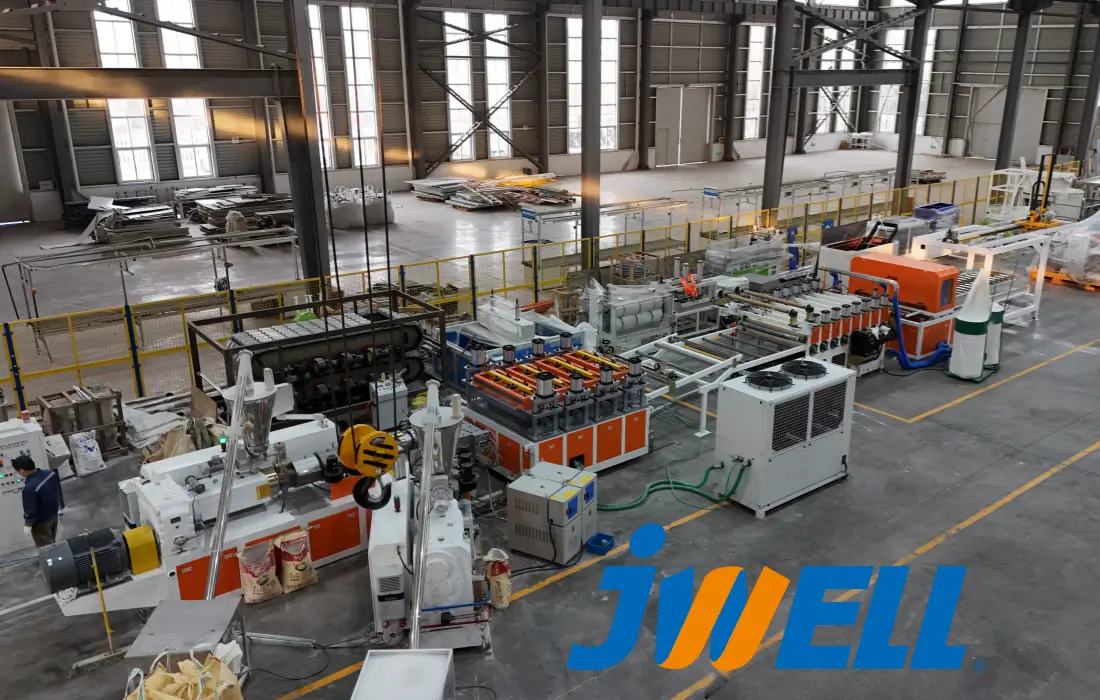
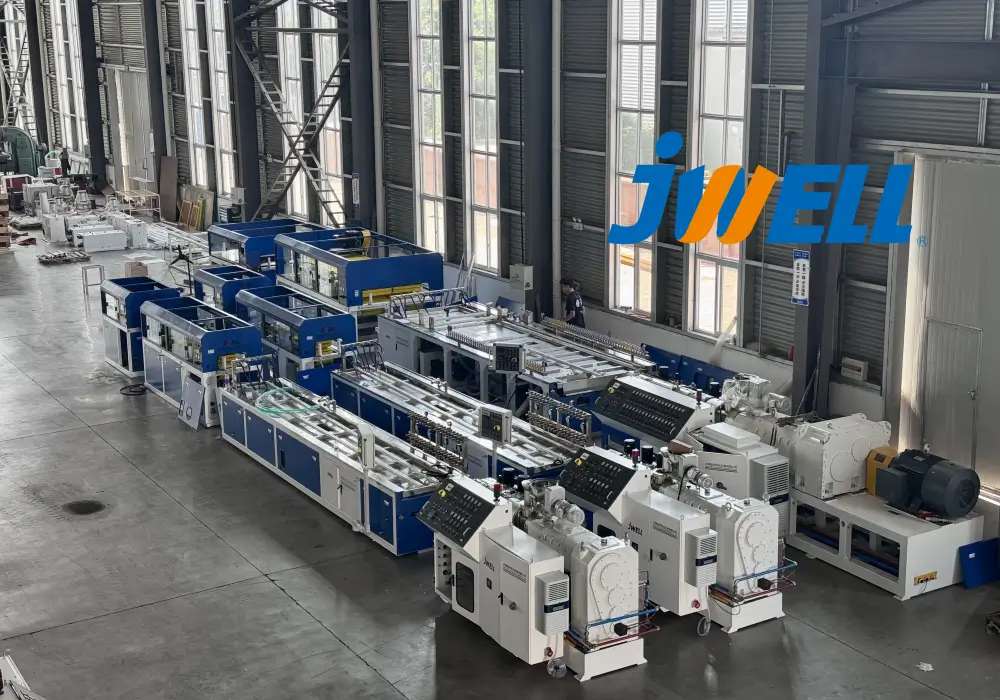

JWELL’s WPC door panel production line is designed for continuous extrusion of PVC/wood-plastic composite hollow door panels from 600 to 1250 mm wide. A typical line combines material feeding, a conical twin-screw extruder, a door-panel die, vacuum calibration, haul-off, cutting and automatic unloading. The final configuration depends on the panel width, wall structure, formulation, target output and required surface finish.
Finished WPC Door Panels and Applications
The line produces hollow WPC and PVC-based door panels for residential, commercial and other interior door applications. Panel dimensions vary by market: common widths referenced for this line include 700 and 800 mm for residential doors and 900, 1000 and 1250 mm for wider commercial formats. Final panel weight depends on thickness, internal cavity design and material density; the existing configuration reference is approximately 12–17 kg per square metre.
Door panels can proceed to laminating, transfer printing with UV curing, vacuum membrane pressing or spraying. Engraved products require different downstream equipment from flat laminated panels, so the required finish should be defined before the line layout and auxiliary machines are confirmed.
WPC Door Panel Extrusion Process
- Feeding and extrusion: the automatic feeder supplies the prepared PVC/wood-powder compound to the SJZ92/188 conical twin-screw extruder for conveying, mixing and plasticizing.
- Profile forming: the die and mould form the specified hollow panel geometry and distribute the melt across the required width.
- Vacuum calibration and cooling: the calibration table supports the profile while vacuum and controlled cooling stabilize its dimensions.
- Haul-off and cutting: synchronized traction moves the panel at a steady speed before it is cut to the ordered length.
- Unloading and finishing: the unloading platform receives the cut panels; selected sanding, engraving, laminating or coating equipment completes the required surface.
Reference Configuration and Technical Data
| Item | Reference for this line |
|---|---|
| Main extruder | SJZ92/188 conical twin-screw extruder with automatic feeder |
| Reference output | 400–600 kg/h |
| Panel width range | 600–1250 mm |
| Standard line length | Approximately 23 m |
| Length with automatic robot arm | Approximately 30 m |
| Reference footprint | Approximately 40–60 m² |
| Reference equipment weight | Approximately 22 t |
| Total installed power | Approximately 225 kW |
| Reference specific energy use | Approximately 220–240 kWh/t |
These figures describe the existing WPC door panel production line configuration, not a universal guarantee. Actual output and energy use vary with formulation, bulk density, panel geometry, cooling conditions, operating settings and selected auxiliaries. JWELL confirms the final equipment list and utilities after reviewing the buyer’s product specification and production conditions.
How to Select the Line Configuration
For an accurate WPC door panel production line proposal, provide the target panel drawing, width and thickness range, cavity structure, formulation or raw-material description, desired hourly output, available electricity and water conditions, workshop dimensions and final surface treatment. These inputs determine the extruder, mould, calibration tooling, haul-off, cutter and downstream finishing package.
Panel line versus a complete door production system
The base extrusion line manufactures the hollow door panel. A complete door manufacturing project may also require a matching WPC door frame extrusion line, mixers, cooling-water equipment, air compressors, CNC routing, sanding, edge processing, laminating, vacuum forming or coating systems. Separating the extrusion scope from downstream finishing prevents unnecessary equipment and makes factory planning clearer.
Installation and Production Support
JWELL can support line configuration, workshop layout planning, installation, commissioning and operator training as part of the project scope. Buyers comparing other profile applications can also review JWELL’s plastic profile extrusion lines and WPC profile extrusion machine.
Frequently Asked Questions
What output can the WPC door panel production line reach?
The SJZ92/188 reference line is specified at 400–600 kg/h. The achievable rate depends on the compound, door-panel geometry, cooling capacity and required surface quality, so it should be confirmed through the final configuration.
Can one line produce different door-panel widths?
The referenced production range is 600–1250 mm, but each panel design requires compatible mould and calibration tooling. Share the drawings for every intended size so changeover requirements can be evaluated.
Which surface-finishing process should be selected?
PVC film lamination suits many flat products; transfer printing with UV curing is used for selected decorative finishes; vacuum membrane pressing can cover engraved or shaped surfaces; and spraying offers additional colour and finish options. The correct process depends on the panel geometry, coating system and local compliance requirements.
What information is needed for a quotation?
Send the panel drawing, size range, material formulation, target output, finish, factory utilities and workshop layout through the JWELL contact page. The engineering team can then define the line boundary and optional equipment.